
What do clients actually pay a designer for?
For years we billed hours as if they were the job. A basketball club, two small tools and an old talk by Talia Cotton made me ask what clients actually pay a designer for, now that AI can do most of the hours.


It sounds like a simple question. I have been chewing on it for a while, and I don't love the answer.
If you go by the invoices, it's hours. Hours adapting a poster to three sizes, swapping a name, fixing a date someone got wrong, exporting the same thing for the twelfth time. Nobody frames those hours, though. What a client remembers is that the last piece still looked like the first one, and that has very little to do with how long it took and a lot to do with decisions somebody made once, at the beginning.
A brand, in the end, is a pile of decisions. A template keeps what those decisions produced. A tool keeps the decisions themselves, which turns out to be a far more useful thing to hand over.
Rules with wiggle room
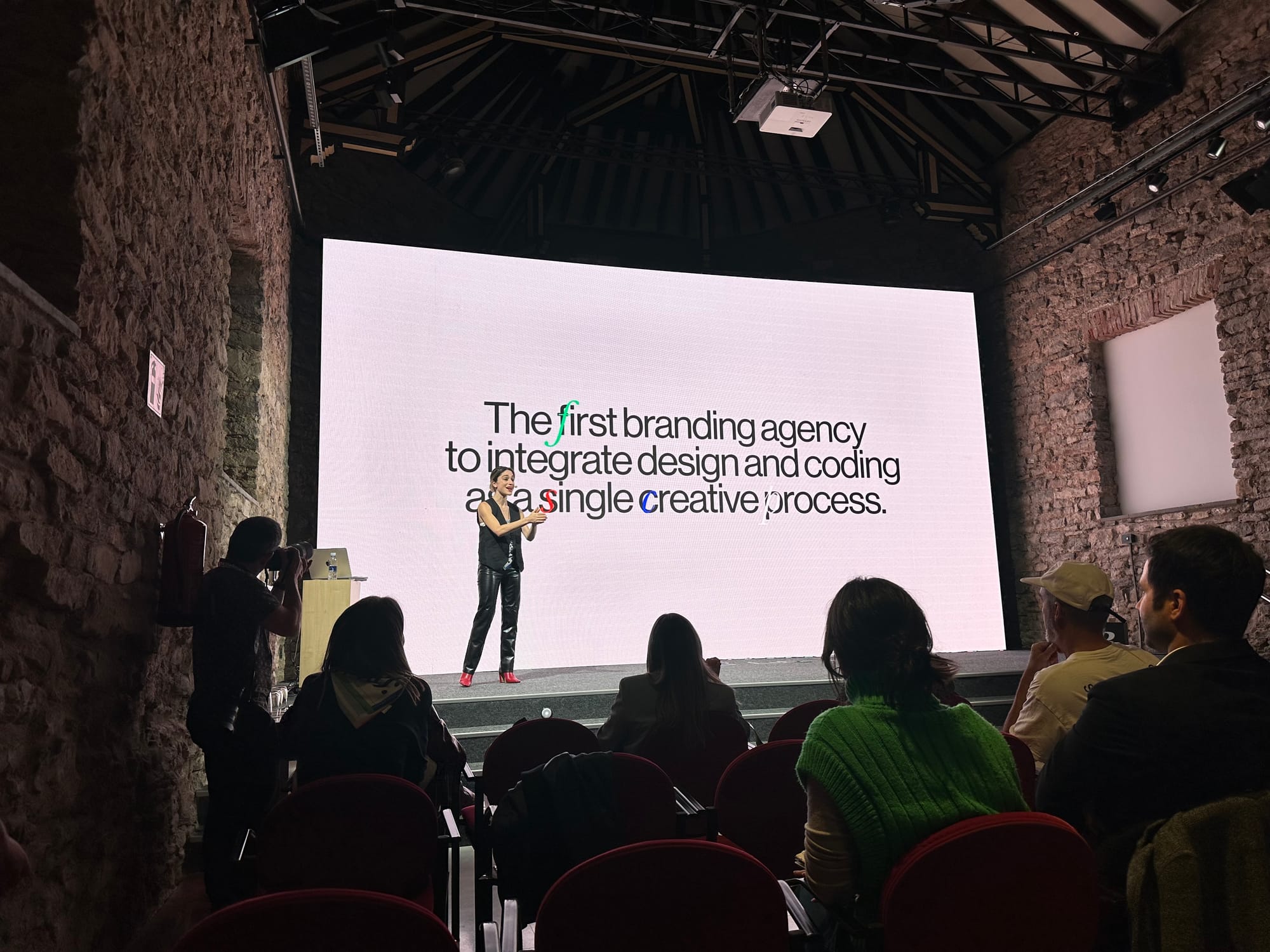
In 2024, Talia Cotton spoke at Basquerville, the Basque festival of design and technology in Vitoria-Gasteiz. The festival is back this week, with other speakers, and her talk came back to me with it. She runs Cotton, a studio in New York that works where branding meets code. Generative identities, custom tools, systems instead of single pieces.
Her best known project is the identity for Guilty by Association, an arts organisation. The logo is drawn by code, it is different every time, and it is taken out of the designer's hands on purpose. She doesn't draw the logo; she writes the rules it gets drawn by. There's a phrase used for this kind of work that I like a lot: rules with wiggle room.
[Your notes from the talk: the line or the example from Talia that stayed with you.]
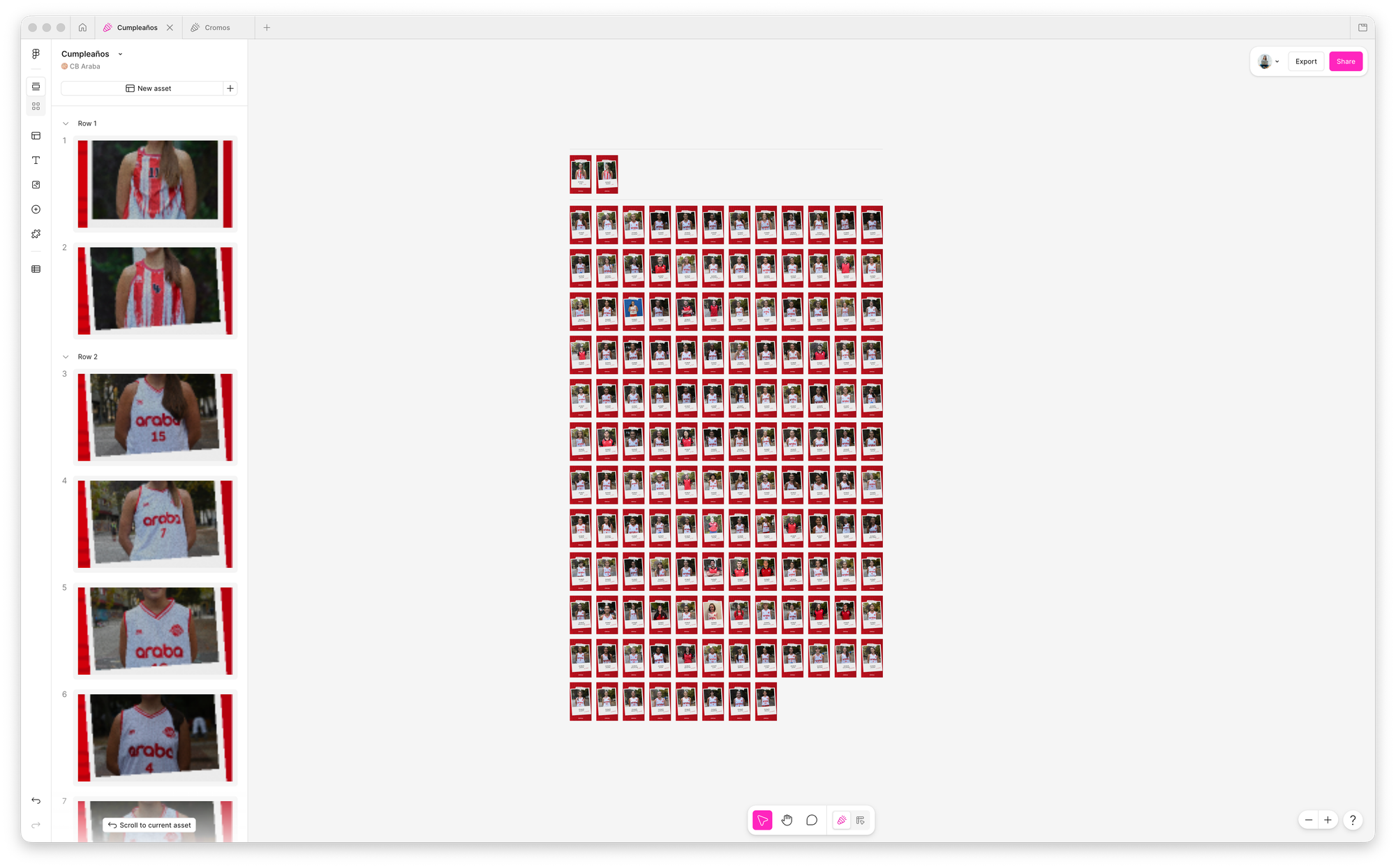
I tried a much smaller version of that idea this month. On 5 October, a basketball club in Vitoria sent me its birthday photos, same as every month for the past year, and instead of opening Figma I sent them back a link. They make their own birthday stories now, and their trading cards. It wasn't all smooth (my first version put so much grain on the photos that they looked like an old TV), but the stories still look like mine.
The hours that were never the work
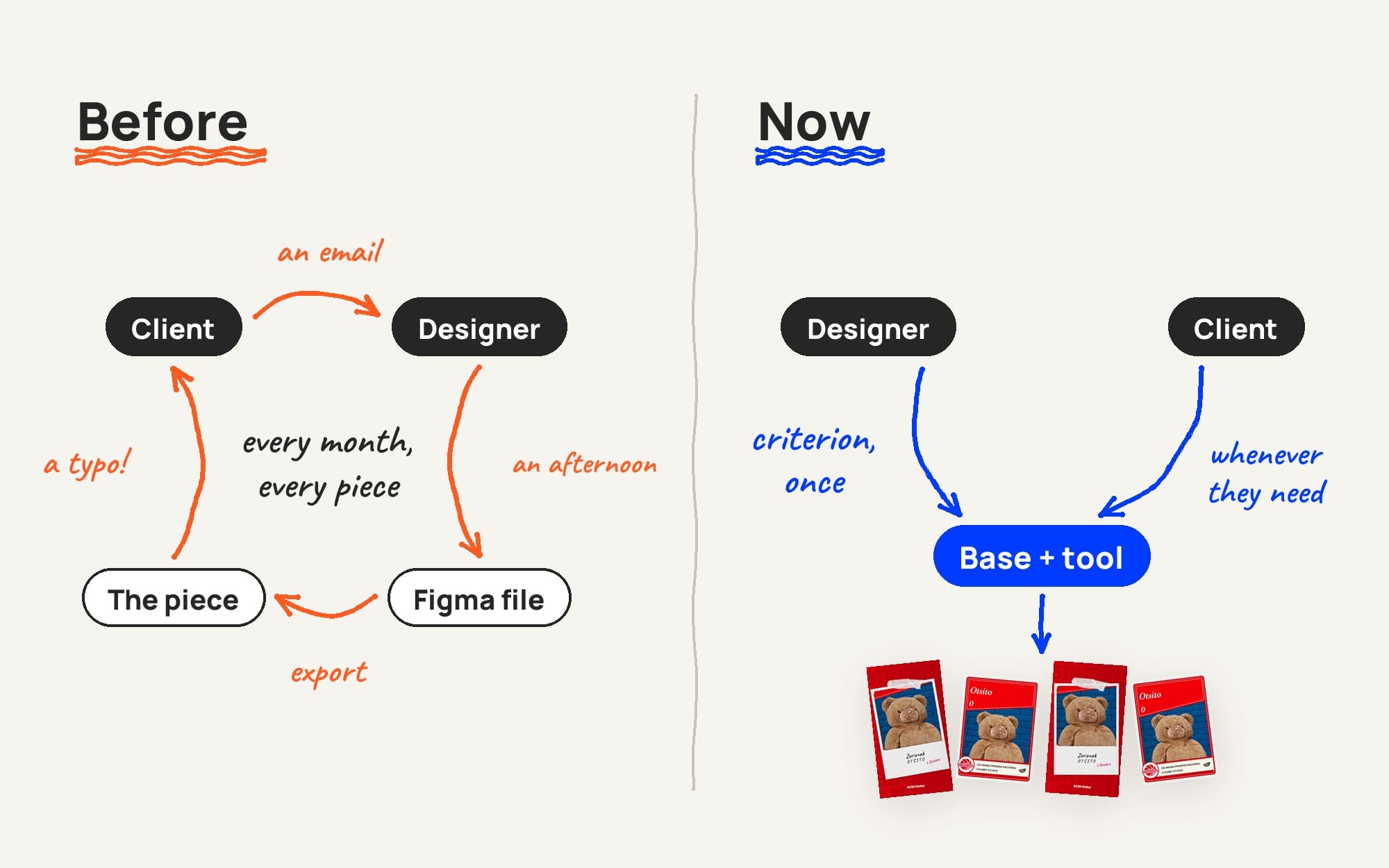
Anyone who works with clients knows this kind of request: the birthday story, the card for the new player, the same banner with another date, the typo somebody spots an hour after it went live. None of it needs design, but all of it needs a designer, because the brand is sitting in a file only the designer can open.
So the client waits. They write, they wait for a gap in your week, they get the piece, they find a typo, they write again. Tiny jobs, and a dependency completely out of proportion to them.
We've been billing those hours for years as if they were the job, when really they were the friction around it.
My value was never in card number 150
The first card is where the thinking happens: which typeface, which red, how the photo sits, where a long surname breaks, what to do when one sponsor's logo is square and the next one is a long wordmark.
The second card needs a bit less of that. By card 150 it needs none at all, just patience, and nobody hires a studio for its patience.
"By card 150 it needs none at all, just patience."
Once I saw it like that, doing the 150th card by hand stopped feeling like good service. It felt more like keeping the client on a leash I had no reason to hold.
What's left when the hours go
This is where it gets bigger than a basketball club.
For a long time, a designer's worth was tangled up with two things: the hours you put in, and how well you knew the software. Knowing every corner of Figma, or InDesign before it, was something you could charge for.
AI is untangling that very quickly. I'm not a developer, and I built both tools in a day, with an AI writing most of the code. What it couldn't do was decide anything. It didn't know the grain was too heavy until I said so. It didn't know which handwriting font was close enough to the original, or that every sponsor's logo had to sit in exactly the same space. Every one of those calls was mine.
So when the hours shrink and knowing the tools stops being an advantage, the question I started with gets sharper. What do clients actually pay a designer for? I think it's what was always underneath: judgement, and the value it gives the client. Everything else is getting cheaper by the month.
Put your judgement in once
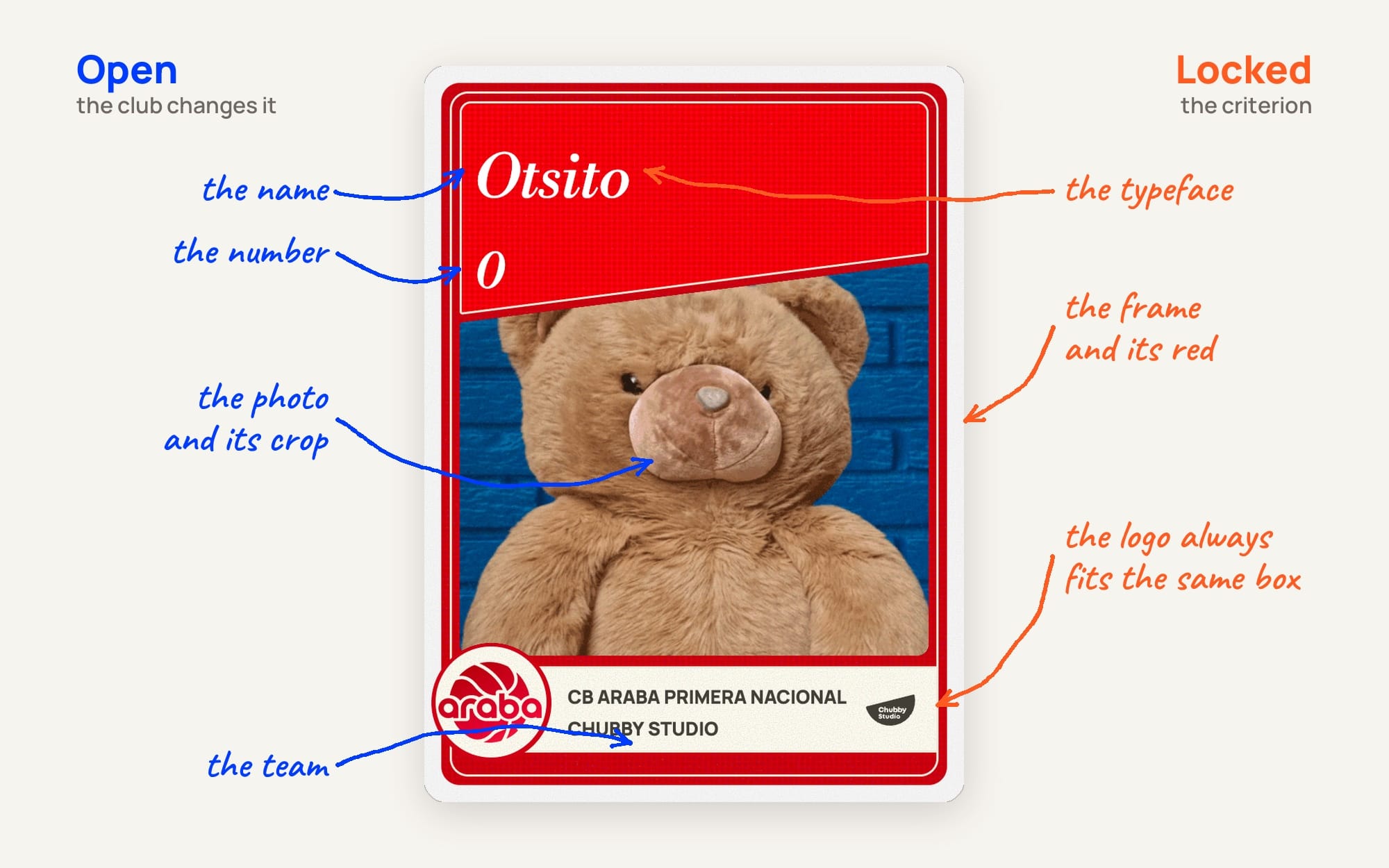
So the idea is to stop applying your judgement piece by piece, and instead put it into the base once, along with a tool that carries it.
The tool already knows the typeface, the colour and the margins. It knows a long name goes onto two lines and how to fit any logo into the same space. The client only brings what changes: a photo, a name, a date, a number.
It's still design work, and honestly a harder kind. You have to decide what stays locked and what's open, turn rules you've only ever carried in your hands into rules a machine can follow, and guess all the ways the data will arrive broken. (Mine arrived as files called 31_IRENE.jpg, with no month in them. Of course it did.)
What the client gets back
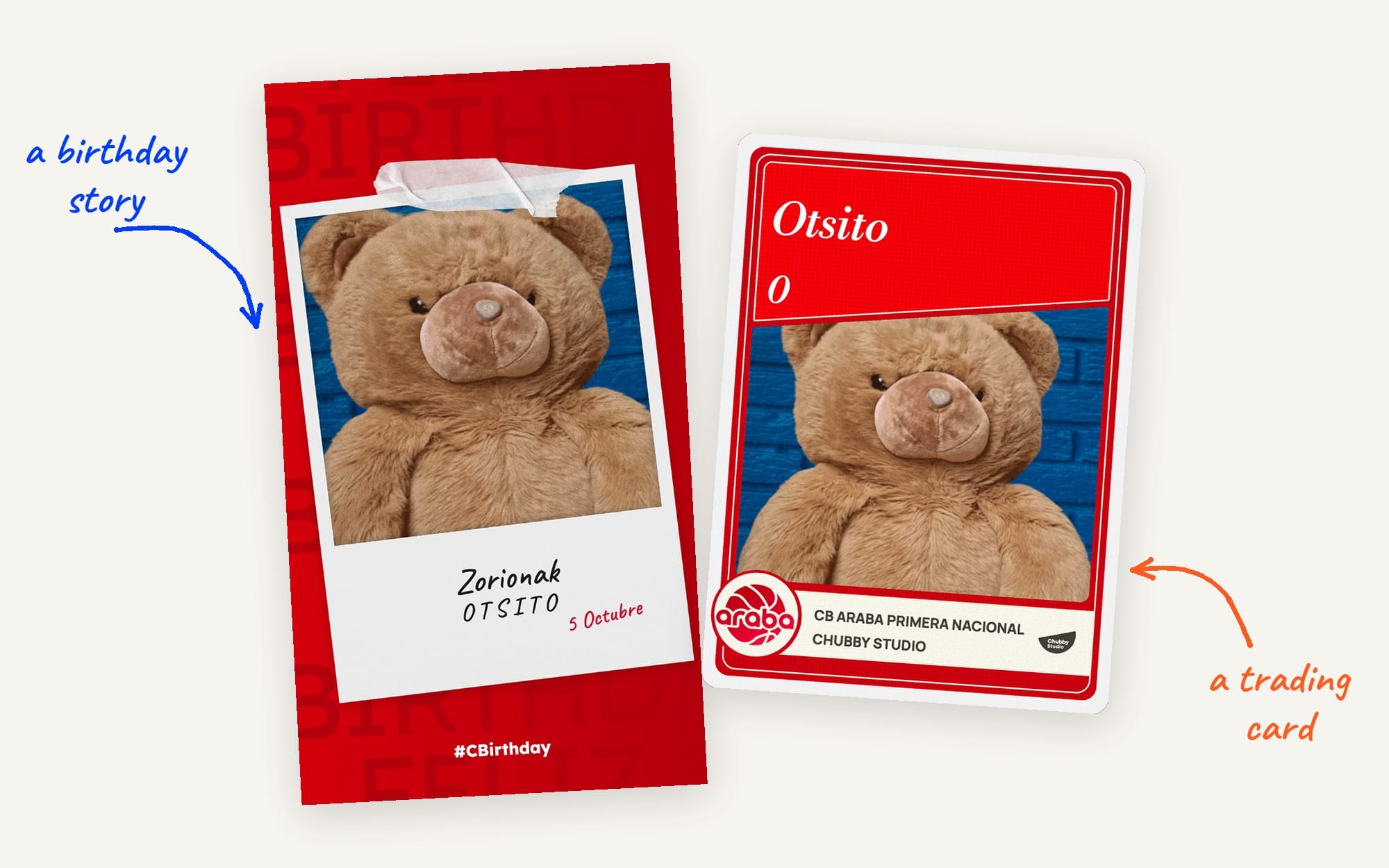
Mostly, time that's theirs. The birthday goes out on the birthday, not whenever the designer has a free afternoon. A wrong name goes from an email and a two-day wait to ten seconds of fixing it and downloading again.
The part that surprised me is control. I expected handing over a tool to feel like losing it, and it's been the other way round. They can change what's meant to change and nothing else. The rules that used to live in my head now live in the tool, which is a lot harder to argue with than I am.
The club doesn't need me in the room anymore, and I think that's what they were paying for all along.
Not everything should be a tool
This only makes sense when the piece repeats, the design has settled and the people using it aren't designers. They don't want the freedom to redesign anything; they just want to stop waiting. If a client wants something new every month, what they need is a designer.
And a tool freezes a decision. When the brand changes, the tool has to change with it, and that part is still very much our job.
Judgement, not hours
Studios have sold hours for a long time, partly because hours are easy to count. I don't think clients were ever really paying for them, though, and now that a machine can do most of the hours, it's getting hard to pretend they were. They were paying for the 150th card to still look right.
Now it does, without me.
We move on.